
Aging in Place Services That Keep Home Steady
September 28, 2026 · Kindred Home Support
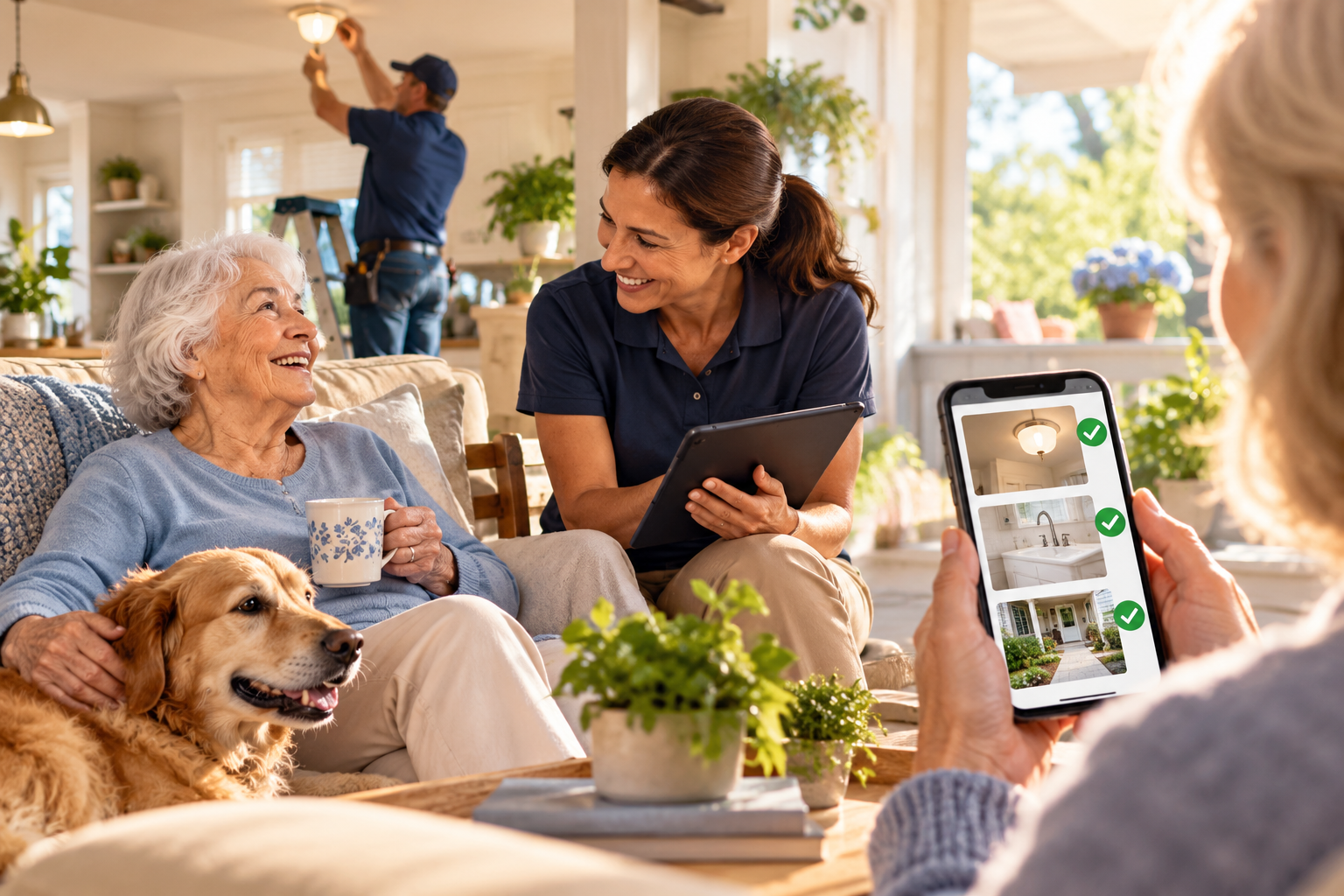
A loose handrail, an expired smoke detector battery, a phone that no longer receives appointment reminders - none of these problems sound dramatic on their own. Yet for an older adult living independently, each can create an avoidable safety risk or turn a normal day into a call for help. Aging in place services address the practical conditions that allow a person to remain comfortably and safely at home, with the right support in place before small disruptions grow.
For families, the question is rarely whether a loved one needs help at all. It is whether the help matches the problem. Personal care, nursing, and medical services are essential when health needs call for them. But many home-related issues fall outside their scope: a tripping hazard in the hallway, a neglected filter, a confusing television remote, a contractor who needs access, or an errand that has become difficult to manage. A dependable home support plan fills that operational gap.
What aging in place services should cover
Aging in place is not simply staying in the same house. It means maintaining a home environment that supports daily routines, mobility, comfort, communication, and access to help. The most useful aging in place services are consistent, practical, and tailored to the condition of the home and the person's changing needs.
Some support is occasional. A family may need help preparing a home after a hospital discharge, coordinating a repair, or checking on a property while its owner travels. Other needs are recurring and benefit from scheduled attention. A regular home visit creates a reliable opportunity to spot changes: a dimmer entryway, an appliance that is beginning to fail, mail accumulating on a counter, or a pathway that has become crowded.
The point is not to turn a home into a clinical setting. It is to keep it functional. When the home works as it should, older adults can preserve familiar routines with fewer interruptions, and care teams can spend their time on care rather than household troubleshooting.
The home is part of the care plan
A well-run care plan can still be disrupted by an unprepared home. A caregiver cannot safely assist someone down a poorly lit walkway. A home health visit becomes more difficult when the thermostat is not working, supplies cannot be located, or a gate and entry instructions have not been managed. These are not medical failures, but they can affect care in meaningful ways.
This is why an environmental safety check should be more than a quick glance around the room. It should consider how the resident actually moves through the home and where daily routines take place. The front door, bed, bathroom, kitchen, laundry area, mailbox, patio, and garage may all deserve attention depending on the household.
A scheduled visit also gives small issues a better chance of being handled early. Replacing a burned-out bulb or securing a loose rug is far simpler than responding after a fall. Testing smoke detectors, changing HVAC filters, checking visible pathways, and making minor comfort adjustments are ordinary tasks. Their value comes from doing them reliably, documenting completion, and returning before the next small issue is missed.
Where non-clinical home support fits
Families sometimes assume they must choose between doing everything themselves and bringing in medical or personal care services. In practice, a steadier solution often combines several forms of support. Home health providers, caregivers, clinicians, and family members each have a distinct role. Non-clinical home support provides one point of contact for the home itself.
That distinction matters. A non-clinical provider should be clear about what it does not do. It does not replace nursing care, administer medication, provide hands-on personal care, diagnose health concerns, or make medical decisions. It can, however, reduce the household friction that makes independent living harder and places extra management work on family members.
For example, home support may coordinate access for a trusted vendor, complete a pathway review, replace a routine household item, pick up a prescription when appropriate, or help reconnect a wearable device that supports communication. If a concern falls outside scope, the right response is to document it and direct the family or care team to the appropriate resource.
Services that make a practical difference
The best plan depends on the person, the home, and the people already involved. Still, several types of support repeatedly help households remain organized and safe:
- Home maintenance support for routine items such as HVAC filters, light bulbs, smoke detector testing, minor mechanical adjustments, and visible safety concerns.
- Environmental reviews focused on clear walking paths, lighting, entry access, trip hazards, and other conditions that can affect safe movement.
- Digital device care for phones, tablets, televisions, wearables, charging stations, notification settings, and basic connectivity problems.
- Concierge assistance for errands, household supplies, prescription pickup, appointment-related preparation, and vendor coordination.
- Property oversight for part-time residents and travelers who need regular checks, issue escalation, and accountable follow-through while away.
The details matter more than broad promises. “Home maintenance” should mean someone can explain what was checked, what was completed, what needs follow-up, and who is responsible for the next step. “Vendor coordination” should mean a real person manages scheduling, access, and completion instead of leaving an older homeowner to chase updates.
What families should expect from a provider
Trust is built through process. Before selecting an aging in place service, families should understand the visit schedule, service boundaries, communication method, insurance and bonding status, background-check practices, and how urgent household concerns are handled. A provider should be able to explain these points directly, without vague assurances.
Visibility is equally important for adult children who live nearby but have limited time, as well as those coordinating support from another state. A short completion summary after each visit can answer practical questions before they become a string of texts and calls: Was the home visited as scheduled? Was the filter changed? Did the technician arrive? Is the pathway clear? Does anything need family approval?
A private portal or organized email record can be particularly useful when siblings share responsibilities or when a discharge planner and home health team need confidence that household basics are being managed. Documentation is not paperwork for its own sake. It creates continuity when several people are supporting the same resident.
When to start services
Waiting for a crisis is understandable, but it usually makes the transition harder. The strongest time to begin is often when the person is still managing well and can help establish preferences. They can decide how they want visits scheduled, which areas of the home matter most, how updates should be shared, and when family members should be contacted.
A change in health, a recent hospital stay, the loss of a spouse, a move to a seasonal schedule, or growing difficulty keeping up with household tasks can all be reasonable prompts. So can a family member's realization that every visit has become a repair list. The goal is not to take over the home. It is to create a dependable routine that protects independence.
For Henderson and Boulder City households, Kindred Home Support provides scheduled, non-clinical home support designed around that routine: home condition, practical tasks, clear updates, and local accountability. It works alongside caregiving and clinical services rather than competing with them.
A safe, functional home rarely stays that way by accident. It stays steady because someone notices the small details, follows through, and keeps the right people informed. That kind of support gives older adults more room to live on their own terms and gives families a clearer view of how home is holding up between visits.