Can Flex Cards Cover Safety Services at Home?
October 13, 2026 · Kindred Home Support
A loose handrail, a dead smoke detector battery, or a tripping hazard near the bed can become a serious problem long before anyone calls it an emergency. That is why many families ask, can flex cards cover safety services that help an older adult remain steady and independent at home?
The practical answer is: sometimes, but coverage depends on the specific Medicare Advantage plan, the type of Flex Card or supplemental benefit offered, and how the service is billed and documented. A Flex Card is not a universal payment card for every household need. Still, some plans provide allowances for eligible home-safety items, wellness services, transportation, over-the-counter products, or supports that address daily living needs.
For families coordinating care from nearby or across the country, the right question is not simply whether a card has a balance. It is whether a planned service fits the member's benefit rules and can be clearly connected to health, safety, or independent living.
What a Medicare Advantage Flex Card May Cover
Flex Cards are supplemental benefit cards offered by some Medicare Advantage plans. They can work differently from one plan to another, even when two cards look similar. A plan may designate funds for dental, vision, hearing, food, utilities, over-the-counter products, transportation, or approved home-support expenses.
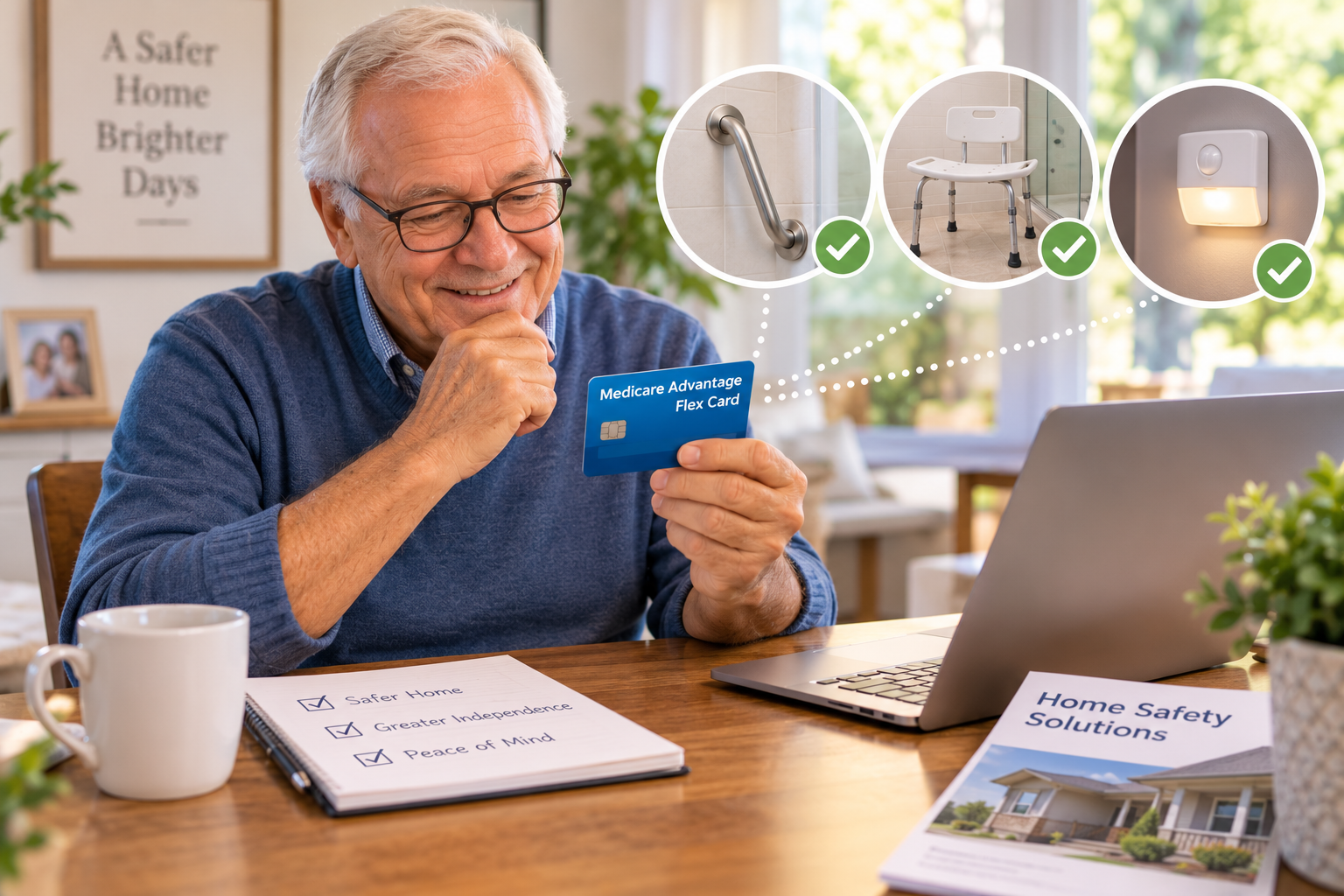
Home safety may be included when a plan specifically offers an in-home support, healthy-home, or wellness allowance. Eligible expenses can sometimes include safety-related products such as grab bars, non-slip materials, shower seating, handheld showerheads, smoke or carbon monoxide detector supplies, or other approved items. Certain plans may also cover an assessment or service connected to preventing falls and supporting safe mobility.
That does not mean every repair or maintenance task is covered. Replacing an HVAC filter may support air quality and comfort, for example, but it may not qualify under a plan's Flex Card rules. The same is true for general handyman work, landscaping, deep cleaning, major repairs, renovation projects, and ongoing property management. A service can be valuable without being an eligible benefit.
Can Flex Cards Cover Safety Visits or Home Support?
Whether Flex Cards can cover safety visits depends on the plan's approved categories. Some benefits are limited to products purchased through designated retailers. Others allow reimbursement for qualifying services, but only with itemized receipts, provider information, and a clear description of what was completed.
A scheduled home-safety visit may be more likely to fit a benefit when it is focused on a defined safety need: identifying fall risks, testing smoke detectors, checking pathways and lighting, confirming that essential devices are working, or installing approved safety items. General household assistance, by contrast, may fall outside the plan's definition of an eligible expense.
Families should also distinguish between a clinical home assessment and non-clinical home support. A home health clinician may assess medical needs, mobility limitations, and care requirements. A non-clinical provider can help maintain the environment around those needs by addressing practical hazards, coordinating repairs, handling minor comfort adjustments, and documenting completed work. Both roles can support a steadier home, but they are not interchangeable and may be covered differently.
Verify Coverage Before Scheduling Work
The safest approach is to verify benefits before using a Flex Card or paying out of pocket with an expectation of reimbursement. Start with the plan's Evidence of Coverage, member portal, or customer service line. Ask for the supplemental-benefits department if the first representative cannot confirm home-safety eligibility.
Use plain, specific language. Rather than asking whether “home services” are covered, describe the expected service. For example: “Does my plan's Flex Card or wellness allowance cover a non-clinical home-safety visit that includes pathway review, smoke detector testing, and installation of approved fall-prevention items?”
Ask these practical questions during the call:
- Is there a home-safety, healthy-home, in-home support, or wellness benefit available?
- Are services covered directly, paid through a designated vendor, or reimbursed after payment?
- Are there approved retailers, vendors, product lists, or prior authorization requirements?
- Does the plan require a physician recommendation, care-manager referral, or documented health need?
- What receipts, invoices, service descriptions, and deadlines are required for reimbursement?
Write down the representative's name, the date of the call, and any reference number. Benefit details can change each plan year, and a clear record protects the member if there is confusion later.
Documentation Makes Eligibility Easier to Evaluate
A vague charge such as “home help” may be difficult for a plan to process. An itemized invoice is more useful because it shows the date of service, the work performed, the safety concern addressed, product costs if applicable, and the amount paid.
For example, a detailed record might state that a visit included testing smoke detectors, replacing customer-approved batteries, reviewing bedroom-to-bathroom pathways, identifying loose cords, adjusting lighting placement, and coordinating a repair for a loose threshold. This does not guarantee reimbursement, but it gives the plan the information needed to determine whether the expense fits a covered category.
Families should keep copies of invoices, receipts, visit summaries, and plan communications together. If an adult child manages support from another state, documentation also provides a dependable view of what was found, what was corrected, and what still needs follow-up.
At Kindred Home Support, scheduled visits and completion updates are designed to make household conditions visible rather than leaving families to guess whether small concerns were handled. That operational record can also help a member organize the documentation a benefit administrator may request.
When a Flex Card Is Not the Right Funding Source
A Flex Card should not delay a needed safety fix. If a smoke detector is not working, a walkway is unsafe, or a bathroom support is urgently needed, address the risk first and confirm reimbursement options as soon as possible. Waiting for a benefit decision can turn a manageable issue into a fall, a disrupted care visit, or an avoidable family crisis.
There are also cases where a monthly home-support membership may provide more consistent value than trying to apply a limited allowance to one-off tasks. Recurring service creates a routine for catching small problems early: filter changes, pathway reviews, device checks, minor adjustments, vendor coordination, and follow-up on unresolved issues. A Flex Card allowance may offset certain eligible expenses, while the membership provides the dependable scheduled service that keeps the home functioning between major events.
For discharge planners, caregivers, and family care partners, this distinction matters. Medicare Advantage benefits can be helpful, but they are plan-specific funding tools, not a replacement for a clear home-support plan. The best arrangement connects the member's available benefits with defined responsibilities, realistic timelines, and one point of contact for household follow-through.
A Practical Next Step for Families
Begin with a short list of the home's actual safety concerns. Focus on the areas that affect daily routines: entryways, bathrooms, stairs, bedroom pathways, lighting, smoke and carbon monoxide detection, temperature comfort, and the devices used to contact family or care teams.
Then confirm the plan benefit before making assumptions about what a Flex Card can pay for. If an expense is eligible, keep the documentation organized. If it is not, you still have a clear picture of what needs attention and can decide how to handle it without losing time.
A safer home is rarely created by one large project. More often, it comes from regular attention to the small details that keep daily life stable, comfortable, and within reach.