Medicare Flex Card Home Safety: What It May Cover
September 30, 2026 · Kindred Home Support
A loose bathroom rug, dim hallway light, or dead smoke detector battery can become a major problem quickly when someone is recovering from illness, managing mobility changes, or living alone. Medicare Flex Card home safety benefits may help with certain eligible purchases, but the card is not a blank check for home repairs, caregiving, or maintenance. What it covers depends entirely on the Medicare Advantage plan that issued it.
For older adults and families, the practical goal is not simply to spend an allowance before it expires. It is to use available benefits thoughtfully while building a steadier home: one with clear pathways, working safety devices, dependable comfort systems, and fewer small problems waiting to interrupt daily life.
What a Medicare Flex Card Actually Is
A Medicare Flex Card is generally a spending card offered by some Medicare Advantage plans. It may be connected to an over-the-counter benefit, a wellness allowance, a healthy-food benefit, or another supplemental program. The amount, eligible categories, participating retailers, purchase methods, and renewal schedule vary by plan.
Original Medicare does not issue Flex Cards. A person must be enrolled in a Medicare Advantage plan that specifically provides one. Even then, the plan controls the rules. A benefit available to a neighbor or advertised by a different insurer may not be available under your plan.
The term “Flex Card” can also create confusion because it sounds broader than it is. Some plans allow a card to be used for approved health-related goods. Others offer restricted allowances for dental, vision, hearing, utilities, food, or other plan-defined needs. Most cards cannot be used freely for cash, general household purchases, major remodeling, rent, or private in-home support services.
Before planning a purchase, locate your plan’s current evidence of coverage, member portal, benefit catalog, or customer service number. Plan materials are more reliable than general online lists because benefits can change each calendar year.
Medicare Flex Card Home Safety: Eligible Items Vary
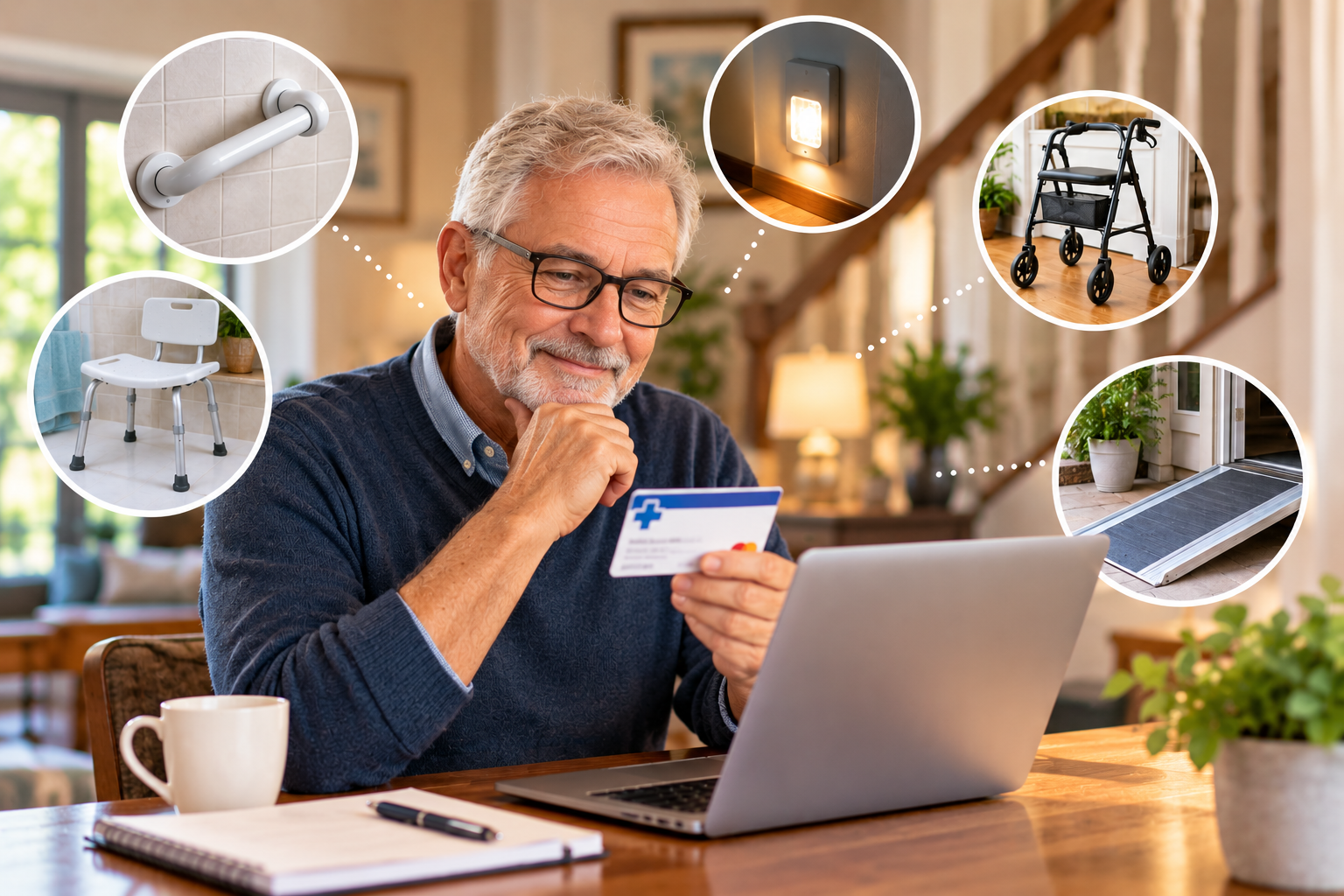
Certain home-safety items may be included in an over-the-counter or wellness catalog when they meet the plan’s eligibility standards. Common examples can include grab bars, non-slip bath mats, shower chairs, raised toilet seats, walking aids, reachers, pill organizers, blood pressure monitors, and sometimes personal emergency response equipment.
That does not mean every version of those products is covered. A plan may require purchase through a specific catalog, pharmacy, retailer, or approved online checkout. It may limit quantity, exclude installation, or classify an item differently than expected. A shower chair may qualify, for example, while labor to assemble it or install related bathroom hardware may not.
This is where a practical distinction matters. Products and equipment are often easier for a plan to define and approve than ongoing household services. A Flex Card may help pay for an eligible safety device, but it usually does not automatically cover home inspections, handyman labor, technology support, recurring property oversight, or vendor coordination. Some Medicare Advantage plans offer separate supplemental benefits that address in-home support, but those benefits have their own rules and may require prior approval.
Avoid assuming that an item is eligible because it is clearly helpful. A better approach is to confirm the exact product category, purchasing channel, and remaining allowance before making the purchase.
Questions to Ask Your Plan Before You Buy
A short phone call can prevent an unusable purchase or a denied reimbursement request. Ask whether your Flex Card benefit includes the specific home-safety item, whether a prescription or recommendation is required, and whether the card can be used at the retailer you have chosen.
Also ask whether installation is included, whether unused funds expire monthly, quarterly, or annually, and whether the benefit can be used only through a catalog. If you are arranging purchases for a parent, ask what authorization the plan needs before speaking with you about the account.
Write down the representative’s name, the date, and any reference number. Keep the item description and receipt. Clear documentation helps if there is a billing question later.
Start With the Risks That Cause Daily Disruptions
A card allowance has more value when it addresses a real risk instead of becoming a last-minute purchase. Begin with the parts of the home used every day: the path from bed to bathroom, entryways, stairs, kitchen work areas, and the route to the mailbox or garage.
Look for cords across walkways, loose rugs, unstable furniture, inadequate lighting, clutter near stairs, and items stored beyond comfortable reach. Check that smoke and carbon monoxide alarms are present, functioning, and within their replacement date. Review whether handrails feel secure and whether frequently used devices are easy to operate.
Comfort issues deserve attention as well. Extreme indoor heat or cold can affect sleep, hydration, medications, and mobility. While a Flex Card is unlikely to fund a full HVAC repair, a routine home check can identify simple issues such as blocked vents, neglected filter changes, or thermostat settings that need attention before they create a larger disruption.
For families coordinating care after a hospital or skilled nursing discharge, timing matters. A home may appear orderly but still be unprepared for a walker, shower routine, medication schedule, or home health visit. Clear access, working lighting, dependable climate control, and charged communication devices can reduce friction during the first days home.
Use Allowances Alongside a Practical Home-Support Plan
An eligible safety item is only useful if it is placed correctly, installed safely, and remains part of a working routine. A grab bar left in its box does not reduce a fall risk. A smoke detector with a low-battery chirp still needs prompt attention. A medical alert device needs to be charged, tested, and worn.
This is why families often benefit from separating funding questions from operational questions. The Flex Card can be one resource for approved products. A reliable local support plan handles the follow-through: reviewing the pathway, changing a filter, testing alarms, coordinating a qualified vendor when work exceeds a non-clinical scope, and documenting what was completed.
Kindred Home Support provides that kind of dependable scheduled service for households in Henderson and Boulder City. Its role is non-clinical and practical: identify small environmental issues early, complete appropriate household tasks, and provide clear visit summaries so families are not left wondering whether something was handled.
For some households, the best use of a Flex Card is a few targeted items paired with regular oversight. For others, the allowance may be too limited for meaningful home changes, and the greater need may be an organized plan for maintenance, vendor accountability, and routine safety checks. It depends on the home, the person’s mobility, the condition of existing equipment, and the availability of family support.
Watch for Flex Card Scams and Overpromises
Flex Cards are frequently used in misleading advertisements. Be cautious with claims that Medicare sends every beneficiary a large cash card for groceries, home repairs, or anything they need. Offers that pressure you to provide a Medicare number, Social Security number, bank information, or card details should be treated carefully.
Do not give a card number to an unfamiliar caller who promises to activate benefits or enroll you in a better plan. Contact the number on your insurance card or use the plan’s established member service channel. If someone is helping you compare coverage during enrollment, make sure they explain which benefits are plan-specific and which services are not included.
A legitimate benefit should come with written terms, eligible categories, and a way to verify your balance. If the explanation is vague, the promise is probably broader than the actual coverage.
Keep the Focus on a Safer, More Reliable Home
Medicare Advantage Flex Card benefits can be useful when they help pay for approved equipment that supports everyday safety. They are not a replacement for clinical care, skilled repairs, or a coordinated plan to keep a home functional over time.
The most useful next step is simple: confirm your current plan benefit, identify the one or two safety gaps that matter most, and make sure the item will be used and maintained. Small, documented improvements can protect independence far better than a card balance spent on products that never become part of the home’s daily routine.